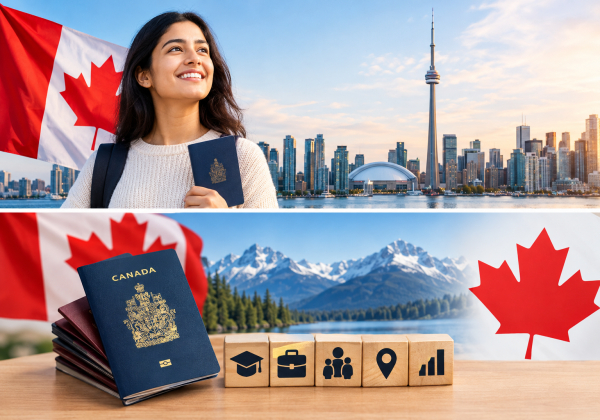
Studying in Canada can open the door to valuable education, Canadian work experience, and future career opportunities. However, international students must understand the rules before

Studying in Canada can open the door to valuable education, Canadian work experience, and future career opportunities. However, international students must understand the rules before accepting a job or applying for a work permit. In 2027, Canada offers several options for international students who want to work during their studies or after graduation. These include off-campus employment, on-campus work, student work placements, and the Post-Graduation Work Permit (PGWP). However, not every student qualifies for every option. Your study permit, school, program, and immigration status can affect your eligibility.In this guide, we explain the main Canadian student work permit rules for 2026, the available options, and the steps you can take to plan your next move.
1. Can International Students Work in Canada in 2027?
Yes. Eligible international students can work in Canada while studying, and some graduates can apply for a work permit after completing their education. However, a Canadian study permit does not automatically give every student permission to work.Before starting a job, check whether your permit includes the required work conditions and whether you meet Immigration, Refugees and Citizenship Canada’s (IRCC) eligibility rules. Generally, students must attend an eligible designated learning institution (DLI), maintain the required student status, and meet the conditions that apply to their program. Students should also obtain a Social Insurance Number (SIN) before beginning employment. Review the official IRCC guide to working as an international student before accepting a job.
2. How Many Hours Can International Students Work Off Campus?
One of the most important rules concerns working hours during the academic term.Eligible international students can work up to 24 hours per week off campus during regular academic sessions.This limit applies to the total hours worked across multiple off-campus jobs. For example, if you work 12 hours at one restaurant and 12 hours at another employer, you have reached your weekly limit. During scheduled academic breaks, such as eligible summer or winter holidays, students who meet the requirements can generally work unlimited hours off campus.However, the break must be part of the school’s official academic calendar, and the student must meet IRCC’s conditions.

Important work restrictions
Before accepting additional shifts, remember these points:
- You generally cannot start working before your study program begins.
- You must meet the eligibility requirements for off-campus employment.
- You cannot exceed the permitted hours during regular academic sessions.
- Students on an authorized leave generally cannot work off campus during that leave.
- Students enrolled only in English or French language courses generally cannot work off campus under the standard student work authorization rules.
Breaking your permit conditions can affect your immigration status and future applications. Therefore, track your working hours carefully and confirm your eligibility whenever your study situation changes.
3. Can International Students Work On Campus?
Eligible international students may work on campus without a separate work permit if they meet the applicable IRCC requirements. On-campus employment can include positions with the educational institution or certain businesses and organizations located on campus, depending on the rules.

Examples of possible jobs include:
- Library assistant
- Campus administrative assistant
- Research assistant
- Student services worker
- Campus food service employee
On-campus employment can help students gain experience while managing their studies. However, you should confirm that your employer and work location qualify under IRCC rules. On-campus work authorization also has conditions relating to your student status. If you plan to work both on campus and off campus, check the separate rules for each type of employment.
4. What Is a Post-Graduation Work Permit (PGWP)?
A Post-Graduation Work Permit allows eligible international graduates to work in Canada after completing an eligible study program. Unlike an employer-specific work permit, a PGWP is generally an open work permit. This means eligible holders can work for most employers in Canada, subject to the permit’s conditions. A PGWP can help graduates gain Canadian work experience, develop professional skills, and explore future immigration pathways. However, graduating from a Canadian institution does not automatically guarantee a PGWP.
Basic PGWP eligibility requirements
Depending on your situation, you generally need to:
- Complete an eligible program at a PGWP-eligible DLI.
- Complete a program that meets the minimum duration requirements, generally at least eight months.
- Maintain the required full-time student status, subject to applicable exceptions.
- Apply within 180 days of receiving confirmation that you completed your program.
- Meet the language requirements and field-of-study requirements that apply to your program and application.
The specific requirements depend on the type of credential, your study permit application date, and other factors. For example, eligible bachelor’s, master’s, and doctoral degree graduates generally need to demonstrate language proficiency at Canadian Language Benchmark (CLB) 7 or the French equivalent, NCLC 7, in all four language skills. Other university and college graduates may face different language and field-of-study rules. Check the official PGWP eligibility requirements before selecting a course or applying.
5. How Long Can You Work After Graduation?
The length of a PGWP depends on the program completed and the applicable immigration rules. Eligible master’s degree graduates may qualify for a PGWP of up to three years, even when their master’s program is shorter than two years, provided it meets the applicable requirements. For other programs, the permit length can depend on the program’s duration and other eligibility factors. A PGWP is not automatically issued for three years to every graduate. Before enrolling, check whether the institution and exact program qualify. This is particularly important for students considering college diplomas, certificate programs, and non-degree courses.
Practical tip: Do not choose a program based only on tuition fees or its advertised duration. Confirm the program’s PGWP eligibility and any applicable language or field-of-study requirements before paying a deposit.
6. What If You Are Not Eligible for a PGWP?
If you do not qualify for a PGWP, you may still have other options, depending on your circumstances.
Possible pathways include:
Employer-specific work permit: You may qualify for a permit tied to a particular employer and job. Some applications require a Labour Market Impact Assessment (LMIA), while others may qualify for an exemption.
Other open work permits: Certain applicants qualify under specific immigration categories. Eligibility depends on the category and current rules.
Further studies: If you wish to continue studying, you may be able to apply for another study permit. You must meet the relevant requirements.
Permanent residence: Some graduates may qualify for an economic immigration program based on their education, language skills, work experience, and other factors.
These options are not automatic alternatives. You must meet the requirements of the specific program or permit.
7. Can Canadian Work Experience Help You Get Permanent Residence?
Yes, eligible Canadian work experience can support some permanent residence applications. For example, the Canadian Experience Class (CEC), managed through Express Entry, is designed for eligible skilled workers with qualifying Canadian work experience. However, not every job counts toward this requirement. Work performed while you were a full-time student generally does not count toward the Canadian work experience requirement for the CEC. Certain other types of employment are also excluded. Graduates should therefore understand the difference between working legally as a student and gaining qualifying work experience for permanent residence. Your occupation, duties, work authorization, language results, and employment history may all matter. A clear immigration plan can help you make informed decisions before your study permit or PGWP expires.
8. How Batis Immigration Can Help
Choosing the right work permit option can be confusing, especially when eligibility rules differ by program. Batis Immigration can help you understand your available immigration options and identify the requirements relevant to your circumstances. Whether you are planning to study in Canada, approaching graduation, or exploring permanent residence, getting advice before making an important decision can help you prepare the right documents and avoid common mistakes.
Ready to explore your Canadian work permit options?
Contact Batis Immigration to discuss your situation, review the applicable requirements, and understand the next steps for your Canadian immigration journey.
Call Batis Immigration at +1 604-659-9400 to discuss your options.
Frequently Asked Questions
1. Can international students work full-time in Canada in 2026?
Eligible students can generally work unlimited hours off campus during scheduled academic breaks. During regular academic sessions, the off-campus limit is 24 hours per week.
2. Do all Canadian college graduates qualify for a PGWP?
No. Graduates must meet the applicable requirements, including those related to the institution, program, language proficiency, and field of study where required.
3. Can I work while waiting for my PGWP decision?
You may be allowed to work full-time while waiting if you meet all applicable IRCC conditions, including having applied for a work permit before your study permit expired and having been eligible to work off campus during your studies.
4. Can I get permanent residence after studying in Canada?
Possibly. Eligible graduates may qualify for programs such as the Canadian Experience Class or certain provincial immigration streams. Eligibility and selection depend on the program’s current requirements.
5. What happens if I work more than 24 hours per week?
Exceeding the permitted hours during regular academic sessions can violate your study permit conditions and may affect your immigration status or future applications.
6. Should I check PGWP eligibility before choosing a college?
Yes. Confirm the eligibility of the specific institution and program before enrolling. Do not assume that every program offered by a DLI qualifies for a PGWP.
Final Thoughts
Canada offers several ways for international students to gain work experience, but each option comes with specific requirements. Understanding your work authorization, tracking your hours, and checking PGWP eligibility can help you avoid costly mistakes. If you are unsure about your next step, seek guidance before your current immigration status expires.
Contact Batis Immigration at +1 604-659-9400 to discuss your Canadian student work permit and post-graduation options.
Disclaimer: This article provides general information, not legal advice. Immigration rules and eligibility requirements can change. Always confirm the latest requirements with IRCC or an authorized Canadian immigration professional.